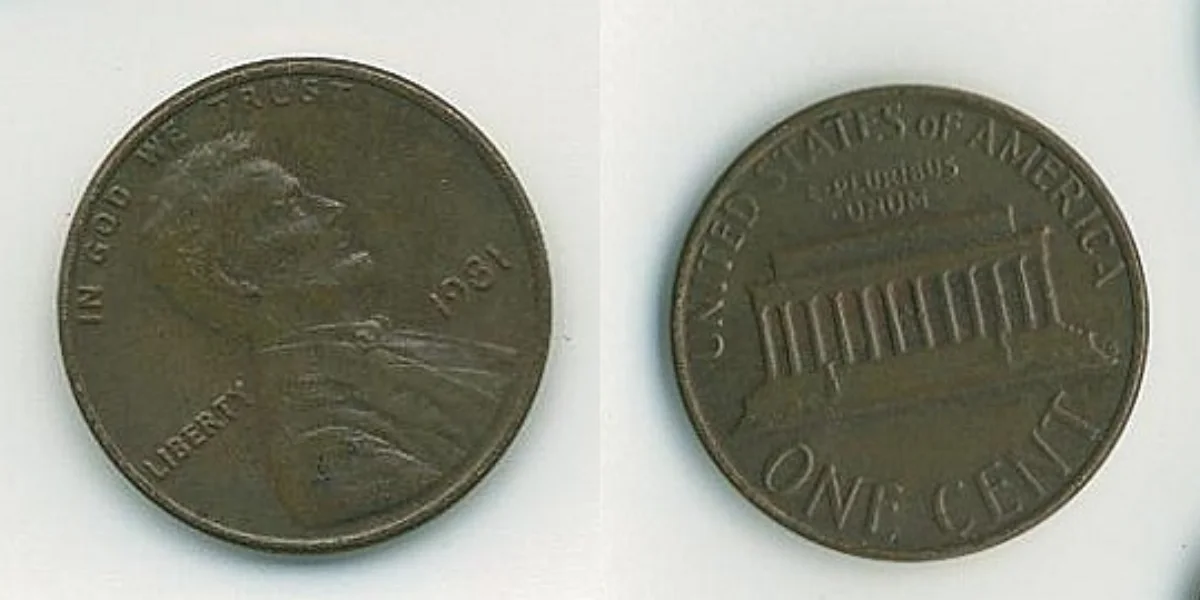
A 1961 penny with no mint mark comes from Philadelphia, which struck 753,345,000 of them. A worn one is worth about one cent. Only coins in near perfect condition bring real money: a 1961 graded MS-67 with full red color sold for $3,172.50 at auction in 2013.
A 1961-D penny has a small D under the date, and Denver struck 1,753,266,700 of them. One grade step makes a huge difference. A 1961-D graded MS-66 sold for $15.28 in 2013, while one graded MS-67 brought $1,440 in 2019 and another $4,241.75 in 2013.
A 1961 proof penny was made for collectors in Philadelphia, has mirror-like fields and carries no mint mark. The Mint struck 3,028,244. A 1961 proof graded Proof-67 sold for $149 in 2026 and one graded Proof-69 for only $25.85 in 2012. Proofs with frosted Lincoln on deep mirrors, called deep cameo, bring far more: one graded Proof-69 Deep Cameo sold for $6,600 in 2023.
| 1961 cents struck at Philadelphia (no mint mark) | 753,345,000 | en.wikipedia.org |
|---|---|---|
| 1961-D cents struck at Denver | 1,753,266,700 | en.wikipedia.org |
| 1961 proof cents (Philadelphia, no mint mark) | 3,028,244 | en.wikipedia.org |
| Metal | Bronze: 95% copper, 5% tin and zinc (cents dated 1947 to 1962) | en.wikipedia.org |
| Weight | 3.1 g | en.wikipedia.org |
| Diameter | 19.05 mm | en.wikipedia.org |
| Where the mint mark is | Under the date on the front. No mint mark means Philadelphia | en.wikipedia.org |