· Coin values ·

1916-D Mercury Dime Value

The 1916-D is the key date of the Mercury dime series, and even a worn one is worth far more than its silver. A nearly perfect one sold for $204,000 in 2020, but many coins sold as 1916-D are fakes, so a grading service has to confirm yours first.

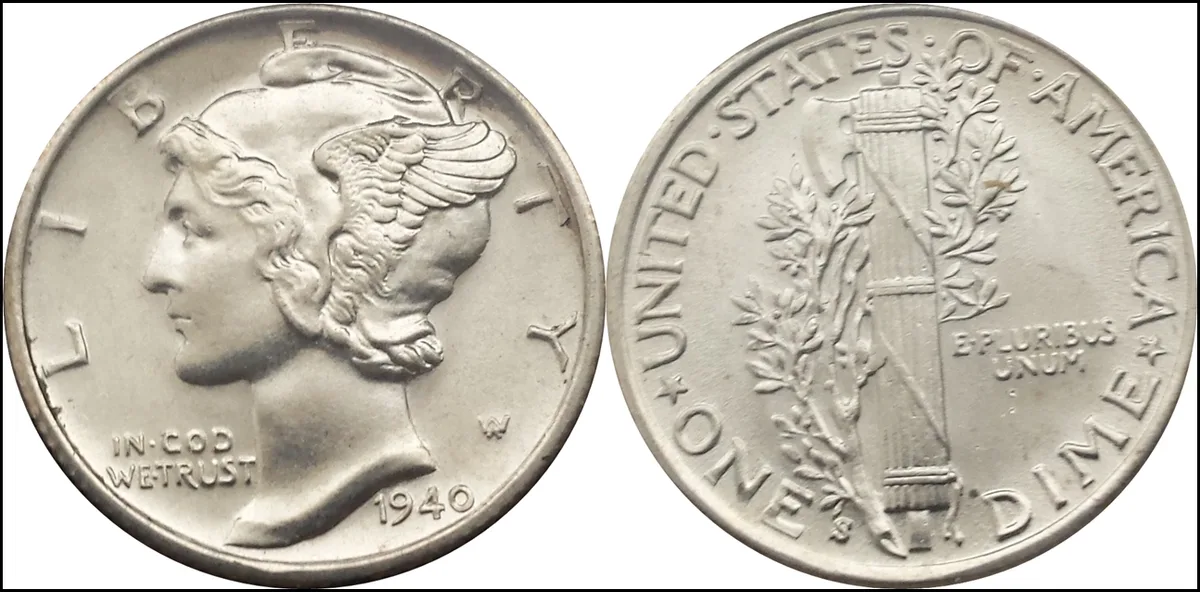
Mercury dime dated 1940 with an S mint mark, front and back. The mint mark sits low on the back, right of the E in ONE, the same spot as the D on a 1916-D dime.
Shown: a 1940-S Mercury dime. The mint mark sits in the same spot on a 1916-D. Photo: Daniel1901100 (CC BY-SA 4.0)

1916 Mercury dime value by mint mark

A 1916-D Mercury dime is a silver dime struck at the Denver Mint in the first year of the design. Denver made only 264,000 of them, so collectors call it the key date of the series. A real one is valuable even when it is badly worn. The same year, Philadelphia and San Francisco made millions, and those two are common. The only difference is a small D on the back of the coin. That makes the D easy to fake. Altered 1916-D dimes are very common, so buyers pay key date money only for a coin that a grading service has confirmed.

A real 1916-D is worth far more than its silver even when it is badly worn. A worn 1916 or 1916-S is common and is worth about its silver. Its silver alone is worth about $3.89 (0.07234 oz at $53.75 an ounce, October 2026).

Highest sale in this table: 1916-D (Denver), graded MS-67 FB, sold for $204,000 in 2020.

1916-D Mercury dime: real auction sales by mint mark (prices checked November 2026)
Mint markMintageGradeSold for (USD)Year sold
1916-D (Denver)264,000Good-4$6902010
1916-D (Denver)264,000Fine-12$2,116.182013
1916-D (Denver)264,000AU-55$8,2252013
1916-D (Denver)264,000MS-65$26,4002020
1916-D (Denver)264,000MS-67 FB$204,0002020
1916, no mint mark (Philadelphia)22,180,080 (about 22 million)MS-67 FB$9,6002020
1916, no mint mark (Philadelphia)22,180,080 (about 22 million)MS-68+ FB$20,4002020
1916-S (San Francisco)10,450,000MS-67+ FB$3,8402025

Highest sale in this table: 1916-S struck off center, graded EF-40, sold for $399.50 in 2017.

1916-D Mercury dime: errors and varieties, real auction sales
Error or varietyGradeSold for (USD)Year sold
1916-S struck off centerEF-40$399.502017
1916-S struck through debrisMS-64$2882024
  • 1916-S struck off center: Part of the design is missing and a blank, curved strip shows on one side.
  • 1916-S struck through debris: A small dent or shape pressed into the design where something sat on the die.

Real auction sales in USD, buyer's fee included. Top-graded coins bring the most; the value of your own coin depends on its condition.

Watch: 1916-D Mercury Dime Value in under a minute

1916 Mercury dime value by mint mark

Denver made only 264,000, and a real one sells for real money in any grade. One graded Good-4 sold for $690 in 2010. A Fine-12 brought $2,116.18 in 2013, an AU-55 brought $8,225 the same year, and an MS-65 sold for $26,400 in 2020.

Philadelphia made 22,180,080 with no mint mark. A worn one is worth about its silver. Only top coins bring big money. One graded MS-67 with full bands sold for $9,600 in 2020, and an MS-68+ brought $20,400 the same year.

San Francisco made 10,450,000, marked with an S. A worn one is also worth about its silver. One graded MS-67+ with full bands sold for $3,840 in 2025.


1916 Mercury dime errors to look for

Mint errors from 1916 are rare at auction. Two from San Francisco show what they bring. A 1916-S struck off center, graded EF-40, sold for $399.50 in 2017. A 1916-S with debris struck into the front, graded MS-64, brought $288 in 2024.

We found no recorded sale of a 1916-D error. A 1916-D is valuable even without one, so check the mint mark first.

Why the 1916-D dime is so scarce

The Mercury dime was new in 1916. Three mints struck it that year, but Denver barely got started. In November 1916, the Denver Mint was told to strike only quarters until a large order was filled. It didn't go back to dimes until well into 1917.

So Denver made 264,000 dimes dated 1916. Philadelphia made about 22 million, and San Francisco made more than 10 million. That gap is the whole story of this coin's value.

Denver (D)264,000en.wikipedia.org
Philadelphia (no mint mark)22,180,080 (about 22 million)coinweek.com
San Francisco (S)10,450,000coinweek.com
Why Denver made so fewIn November 1916 Denver was told to strike only quarters until a large order was filled. It did not strike dimes again until well into 1917en.wikipedia.org
Metal90% silver, 10% copperen.wikipedia.org
Weight2.500 g (2.5 g)en.wikipedia.org
Diameter17.91 mmen.wikipedia.org
DesignerAdolph Weinman (design dated 1916)en.wikipedia.org

The tables above show real sales for all three 1916 dimes. Even a worn Denver coin stands far apart from the other two.

Where to find the D mint mark

Start with the front. It shows Liberty in a winged cap, and the date 1916 is at the bottom. Then turn the coin over. The back shows a bundle of rods with an axe and an olive branch.

The mint mark is a tiny letter low on the back. Look to the right of the E in ONE, by the base of the olive branch. A magnifying glass and a bright lamp help a lot.

  • No letter. The coin is from Philadelphia. It's the common one.
  • An S. The coin is from San Francisco. It's also common.
  • A D. The coin may be the key date from Denver. Don't clean it, and read the next section before you do anything else.

On a worn dime the letter can be flat and hard to read, and a worn S can look like a D. If you can't tell which letter it is, don't guess. A coin dealer can look at it in a minute.

Why so many 1916-D dimes are fakes

A common 1916 dime from Philadelphia looks just like the Denver coin, apart from the missing letter. So people add one. Grading experts say altered 1916-D dimes are very common. In most of them, a D has been placed on the back of a real 1916 Philadelphia dime.

Here is what the grading experts look for under a strong glass.

  • The shape of the D. A real one is boxy and squared off. It stands tall and looks crisp, with a small triangle of open space inside the letter.
  • A D that looks wrong. On fakes the letter is often too thick, too rounded, too soft or too large. Sometimes it sits too far from the branch.
  • A seam. An added letter can leave a fine line where it meets the surface of the coin. Dirt and toning can hide that line.
  • Marks around the letter. Discoloration or tool marks next to the D are warning signs.

Only four reverse dies were used to strike the real coins, so experts know just what a true D should look like. You can't make that call at the kitchen table, and a photo can't make it either. Our app can name the coin and show an estimated value range, but it can't tell you whether a D is real.

What to do if your dime has a D

Treat the coin as unproven until an expert has seen it. Experts advise having a key date coin like this checked by a top grading service. They seal a real coin in a labeled plastic holder with its grade. Buyers trust that holder, and most won't pay key date money without it.

  • Don't clean it. Cleaning leaves fine scratches and lowers the value, even on a real coin.
  • Hold it by the edge and keep it in a soft coin flip or a small envelope.
  • Show it to a local coin dealer first. A dealer may spot an added D right away and save you the grading fee.
  • Be careful buying one. A loose 1916-D with no grading holder is a risk at any price.

Condition still matters once the coin is confirmed. In March 2020, a 1916-D dime sold for $204,000 at auction. It was graded MS-67 with full bands, which means it never circulated and the bands on the rods were sharply struck. Almost no 1916-D dimes look like that. Most were spent for years and are heavily worn.

If your 1916 dime has no D

Most 1916 Mercury dimes are from Philadelphia or San Francisco. They aren't rare, but they aren't pocket change either. Every Mercury dime is 90% silver, so even a worn one is worth more than ten cents.

A 1916 dime that still has its first shine is worth a closer look, since it's the first year of the design. Compare yours with the table above, then see the other dates on our Mercury dime value page. If grading terms are new to you, our coin value guide explains them in plain words.


· Questions ·

1916-D Mercury Dime Value FAQ

How much is a 1916-D Mercury dime worth?

A real one is valuable in any condition, because only 264,000 were made. The tables on this page show real auction sales, from $690 for a worn coin to $204,000 for a nearly perfect one. Those prices apply only to a coin a grading service has confirmed.

Where is the mint mark on a 1916 Mercury dime?

It's on the back, near the bottom. Look to the right of the E in ONE, by the base of the olive branch. A D means Denver and an S means San Francisco. Philadelphia coins have no mint mark.

How can I tell if my 1916-D dime is real?

You can't be sure at home. A real D is boxy and crisp, and a fake one is often too thick, too round or too soft. Altered coins are very common, so send yours to a grading service before you sell it or insure it.

Is a 1916 Mercury dime with no mint mark worth anything?

Yes, but not key date money. It's from Philadelphia, which made about 22 million that year. It's 90% silver, so it's worth more than face value, and a bright one that never circulated is worth more.

Why is it called a Mercury dime?

The front shows Liberty wearing a winged cap. People mistook her for the Roman god Mercury, and the name stuck. Adolph Weinman designed the coin, and it was made from 1916 to 1945.

Have the coin in your hand?

Photograph both sides and the app names the coin and shows an estimated value for its condition.

Coin Value Checker app icon

Coin Value Checker Free

4.5 · 1,566 ratings on the App Store

Download on the App StoreGet it on Google Play

or scan with your camera to download for free

· Sources ·

Where the figures on this page come from

Every number in this article is listed here with its source, last checked on November 3, 2026. Prices in the tables are real auction sales, each read on its lot page.

Year of issue1916en.wikipedia.org
Years the Mercury dime was made1916 to 1945en.wikipedia.org
Denver (D)264,000en.wikipedia.org
Philadelphia (no mint mark)22,180,080 (about 22 million)coinweek.com
San Francisco (S)10,450,000coinweek.com
Place in the seriesThe 1916-D is the key date of the Mercury dime seriesen.wikipedia.org
Why Denver made so fewIn November 1916 Denver was told to strike only quarters until a large order was filled. It did not strike dimes again until well into 1917en.wikipedia.org
Where the mint mark isOn the back, to the right of the E in ONE, by the base of the olive branch. Philadelphia coins have no mint marken.wikipedia.org
Metal90% silver, 10% copperen.wikipedia.org
Weight2.500 g (2.5 g)en.wikipedia.org
Diameter17.91 mmen.wikipedia.org
DesignerAdolph Weinman (design dated 1916)en.wikipedia.org
DesignFront: a young Liberty in a winged cap, often mistaken for the Roman god Mercury. Back: a fasces (a bundle of rods with an axe) and an olive branchen.wikipedia.org
What "full bands" meansOn a sharply struck dime the horizontal bands on the fasces show full detailen.wikipedia.org
Altered coinsThe 1916-D is one of the most counterfeited US coins. Most fakes are made by adding a D to a genuine 1916 dimecoinweek.com
Expert adviceBuy only certified (professionally graded) examples, even in low gradescoinweek.com
What a genuine D looks likeBoxy and squared off, tall and crisp, with a triangular opening inside the letter. Only four reverse dies were usedcoinweek.com
What a fake D often looks likeToo thick, too rounded, too soft or too large, and sometimes too far from the branchcoinweek.com
Silver content0.07234 troy oz of pure silveren.wikipedia.org

Coin Value Checker Free

4.5· 1,566 ratings on the App Store

Coin Value Checker Free right from your phone

Snap a photo — the app identifies the coin, shows its year, mintage and value by grade, and keeps your collection.

  • Photo ID
  • Prices by grade
  • Free to try

Scan to get the app with your phone camera

Opens the app page — no typing needed.

Download on the App Store